

Parents often delay their child’s first dental appointment until pain, visible cavities, or orthodontic concerns appear. From a clinical perspective, this approach misses a critical preventive window. Pediatric dentistry is designed to monitor oral development from infancy, identify early risk factors, and guide families toward habits that prevent complex dental problems later in life.
At Al Safwa Medical Center in Bani Yas, Abu Dhabi, pediatric dental care is structured around early assessment, minimally invasive intervention, and long-term oral health planning. Understanding when to schedule the first visit and what actually happens during it helps parents make informed decisions rather than reactive ones.
When should a child first visit the dentist?
Most international dental associations, including the American Dental Association (ADA) and the American Academy of Pediatric Dentistry, recommend a child’s first dental visit by the age of one or within six months of the first tooth erupting.
This recommendation is not arbitrary. Clinically, the eruption of the first primary tooth marks the point at which:
- Oral bacteria begin colonizing tooth surfaces
- Feeding habits start influencing enamel integrity
- Jaw growth and bite relationships become observable
Delaying the first visit until age three or four often means the dentist’s role shifts from prevention to correction.
At Al Safwa Medical Center, early visits are used to establish baseline records rather than perform invasive procedures. In most cases, the appointment is observational and educational, not treatment-driven.
Why early dental check-ups matter from a clinical standpoint

Early dental visits are often misunderstood as unnecessary if no visible problems exist. From a dental perspective, this assumption overlooks several clinically relevant factors.
Enamel vulnerability in primary teeth
Primary teeth have thinner enamel layers compared to permanent teeth. This makes them more susceptible to:
- Rapid caries progression
- Acid erosion from feeding practices
- Structural breakdown once decay begins
By the time discoloration or pain becomes noticeable, restorative intervention is often unavoidable.
Jaw growth and bite development
Dentists trained in pediatric dentistry assess:
- Maxillary and mandibular growth symmetry
- Early signs of crossbite, open bite, or crowding
- Functional habits such as thumb sucking or mouth breathing
Identifying these patterns early reduces the likelihood of complex orthodontic treatment later.
Oral microbiome monitoring
Caries is a bacterial disease influenced by diet, hygiene, and transmission from caregivers. Early visits allow dentists to assess risk factors and counsel parents before decay becomes established.
For more detail on the importance of early dental visits, see this clinical overview by a pediatric dentistry practice.
What happens during a child’s first dental appointment?
The first visit is structured to be calm, non-threatening, and age-appropriate. At Al Safwa Medical Center, pediatric appointments follow a step-by-step clinical protocol.
Clinical assessment typically includes:
- Visual examination of erupted teeth
- Evaluation of gums and oral soft tissues
- Assessment of jaw development and bite
- Review of feeding and oral hygiene habits
Radiographs are not routinely taken unless clinically indicated.
Parent-focused education
Dentists discuss topics such as:
- Appropriate brushing techniques for infants and toddlers
- Fluoride exposure based on local water and toothpaste use
- Feeding patterns that increase caries risk, including nighttime bottle use
The goal is prevention through knowledge, not intervention.
For additional clinical guidance on what to expect during your child’s first dental visit, see the Stanford Children’s Health overview on a child’s first dental visit.
What dental problems can be prevented with early visits?
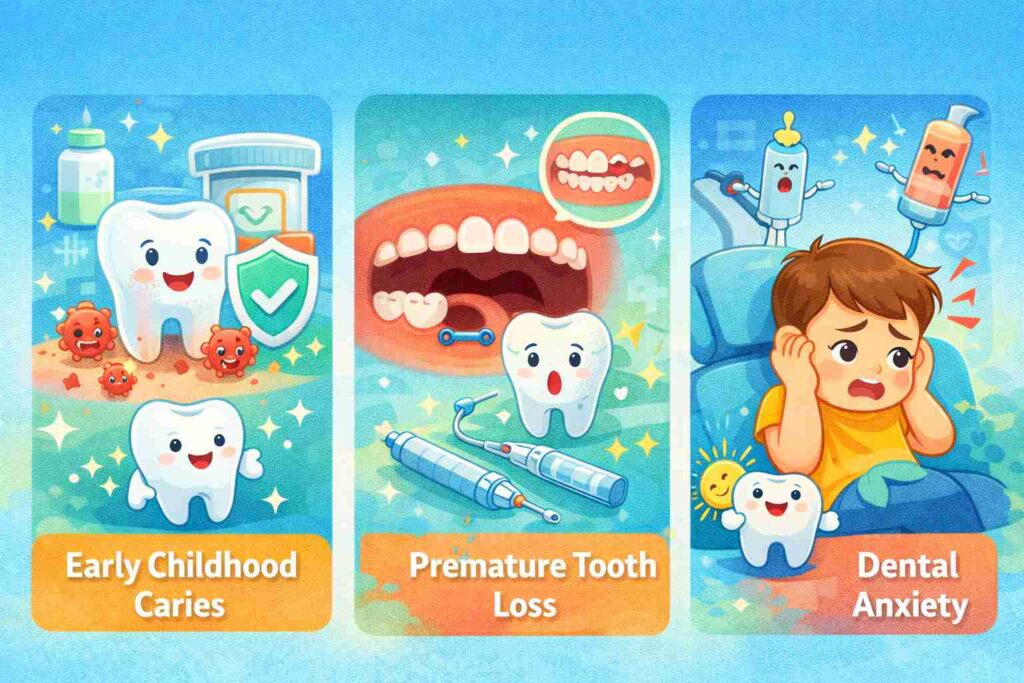
Early dental care is not about finding problems but preventing predictable ones. Clinically, the most common preventable conditions include:
Early childhood caries
Often referred to as “baby bottle tooth decay,” this condition can begin as soon as teeth erupt. Early visits allow for risk stratification and preventive fluoride strategies.
Premature tooth loss
Untreated decay can lead to early extraction, which affects:
- Speech development
- Chewing efficiency
- Space maintenance for permanent teeth
At Al Safwa Medical Center, space maintainers are used when necessary to preserve proper alignment.
Dental anxiety
Children introduced to the dental environment early are significantly less likely to develop dental fear. This improves cooperation and treatment outcomes throughout life.
Are dental sealants necessary for children?
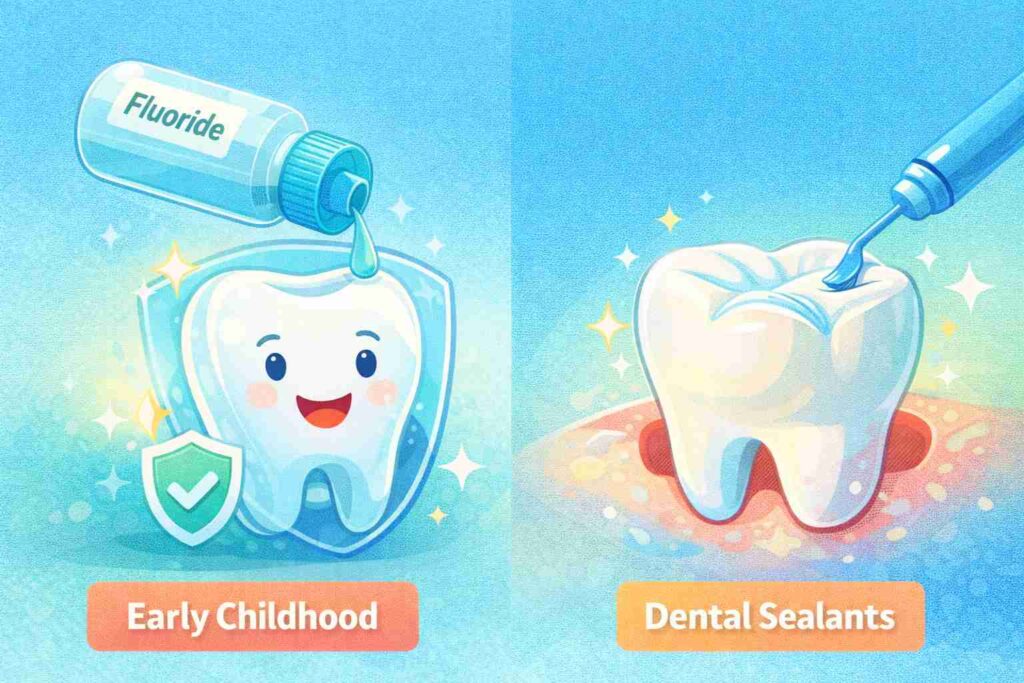
Dental sealants are a preventive measure applied to the chewing surfaces of molars, where pits and fissures make cleaning difficult.
Clinically, sealants are recommended when:
- Permanent molars erupt, usually around age six
- The child has moderate to high caries risk
- Deep fissures are present even without visible decay
At Al Safwa Medical Center, sealants are applied using materials compliant with international standards and are monitored during routine check-ups for retention.
How fluoride is used safely in pediatric dentistry
Fluoride remains one of the most evidence-backed preventive tools in dentistry. Its use, however, must be controlled and age-appropriate.
Professional fluoride applications:
- Strengthen enamel against acid attacks
- Slow early demineralization
- Reduce caries incidence in high-risk children
According to clinical research, fluoride continues to demonstrate significant effectiveness in preventing early childhood caries when used appropriately (see the full clinical study on fluoride effectiveness in reducing early childhood caries).
Dentists at Al Safwa Medical Center evaluate fluoride exposure holistically, considering toothpaste use, diet, and prior treatments to avoid overexposure.
When should orthodontic evaluation begin?
Orthodontic concerns are not limited to teenagers. Clinically, early assessment allows interceptive strategies that reduce treatment complexity later.
Most orthodontic guidelines recommend an evaluation by age seven. This does not always mean braces, but it allows detection of:
- Jaw growth discrepancies
- Early crowding
- Harmful oral habits
If necessary, referrals for orthodontic braces or future Invisalign planning are discussed in a staged, conservative manner.
How Al Safwa Medical Center approaches pediatric dental care
Pediatric dentistry at Al Safwa Medical Center is integrated into a multidisciplinary model. Children benefit from collaboration between general dentists, pediatric specialists, and orthodontic consultants.
Clinical principles followed:
- Conservative treatment planning
- Minimally invasive restorative techniques
- Age-appropriate communication and behavior guidance
Procedures such as pediatric sealants, preventive fluoride therapy, and restorative treatments are performed with materials compliant with ISO standards, including restorative resins aligned with ISO 4049 specifications.
How parents can prepare their child for the first visit

Preparation significantly influences a child’s perception of dental care.
Dentists recommend that parents:
- Avoid using fear-based language
- Describe the visit in neutral, positive terms
- Schedule appointments when the child is well-rested
At Al Safwa Medical Center, appointment timing and pacing are adapted to the child’s comfort level, minimizing stress for both child and parent.
What happens if treatment is needed at an early age?
Not all early visits are purely preventive. When treatment is required, clinical decisions are guided by:
- Extent of decay
- Child’s age and cooperation level
- Long-term impact on oral development
Options may include minimally invasive restorations, pulp therapy, or extraction with space maintenance. Each plan is discussed transparently with parents, including alternatives and long-term implications.
Why choosing a pediatric-focused dental clinic matters
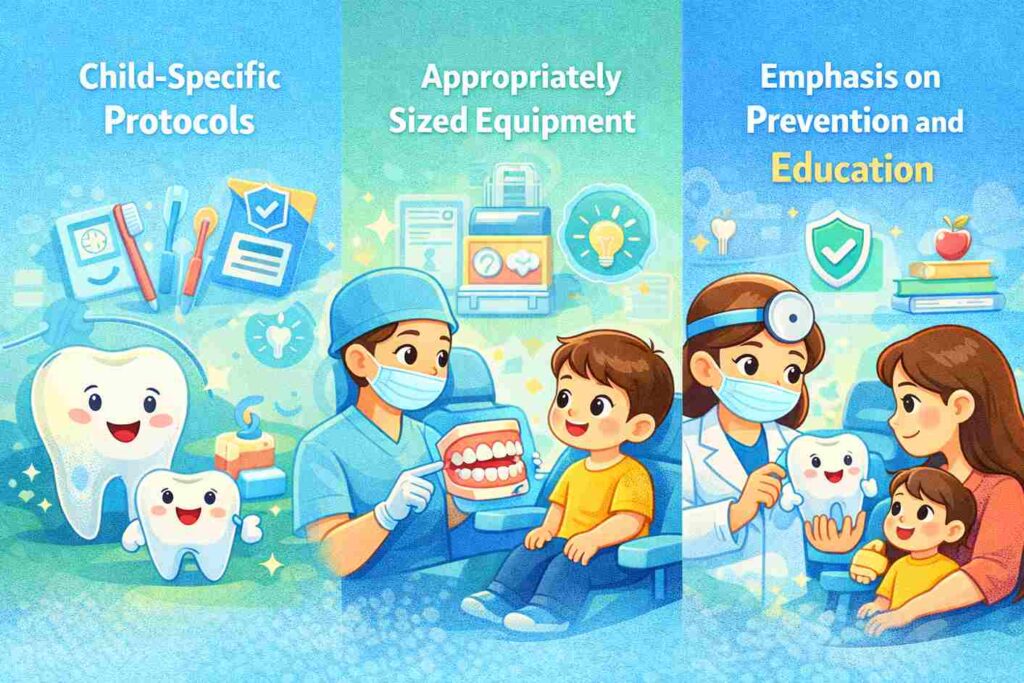
Children are not treated as “small adults” in dentistry. Differences in anatomy, psychology, and growth patterns require specialized training.
At Al Safwa Medical Center:
- Pediatric patients are managed using child-specific protocols
- Equipment sizes and materials are selected appropriately
- Dentists emphasize prevention and education over intervention
This approach aligns with global best practices in pediatric dentistry while remaining grounded in local patient needs in Abu Dhabi.
Conclusion
A child’s first dental visit is not a milestone to postpone but a foundation to build upon. Early assessment, preventive guidance, and parent education reduce the likelihood of complex dental treatments later in life.
For families in Abu Dhabi seeking medically grounded, prevention-focused pediatric dental care, Al Safwa Medical Center serves as a reliable local reference point. Ongoing education, conservative treatment planning, and adherence to international dental standards form the basis of its pediatric dental services.
FAQs
When should my child first visit the dentist?
A child should visit the dentist by the age of one or within six months after the first tooth erupts. Early visits allow dentists to assess oral development, monitor enamel health, and guide parents on preventive care before dental problems begin.
Why is an early dental visit important if my child has no cavities?
Even without visible cavities, early dental visits help identify enamel vulnerability, jaw growth patterns, and habits that increase future decay risk. Preventive guidance at this stage reduces the likelihood of complex dental treatment later.
Are dental X-rays safe for young children?
Dental X-rays are safe for children when clinically indicated and performed with protective measures. Pediatric dentists follow strict guidelines to minimize radiation exposure while ensuring accurate diagnosis.
Can dental problems really start in baby teeth?
Yes. Primary teeth have thinner enamel and are more susceptible to rapid decay. Untreated dental issues in baby teeth can affect chewing, speech development, and the alignment of permanent teeth.
What are dental sealants and does my child need them?
Dental sealants are protective coatings applied to the chewing surfaces of molars to prevent decay. They are recommended for children with deep grooves or increased cavity risk, especially when permanent molars erupt.
Is fluoride safe for children’s teeth?
Fluoride is safe and effective when used in age-appropriate amounts. Professional fluoride treatments strengthen enamel and reduce cavity risk, with exposure carefully assessed to avoid overuse.
When should orthodontic evaluation begin for children?
Orthodontic evaluation is recommended by age seven. Early assessment helps detect bite or jaw growth issues and allows for timely intervention that may reduce the need for complex orthodontic treatment later.
How can parents prepare their child for a first dental visit?
Parents should describe the visit positively, avoid fear-based language, and schedule appointments when the child is well-rested. A calm introduction helps children build long-term comfort with dental care.
What if my child needs dental treatment at a young age?
If treatment is needed, dentists use conservative, minimally invasive approaches based on the child’s age and dental development. All treatment options are discussed with parents, including long-term oral health considerations.
Why choose a pediatric-focused dental clinic for children?
Pediatric-focused clinics use child-specific protocols, materials, and communication techniques. This approach improves cooperation, safety, and treatment outcomes compared to general adult-oriented dental care.
