
Space maintainers in Abu Dhabi
Space maintainers in Abu Dhabi help protect the space left after a baby tooth is lost too early, so the permanent tooth has a better chance to come in correctly. At Al Safwa Medical Center, our pediatric dentistry team checks your child’s teeth, bite, and growth stage to decide whether a space maintainer is needed.
Who needs space maintainers?
A child may need a space maintainer when a baby tooth is lost earlier than normal because of decay, injury, infection, or extraction. Baby teeth are not only temporary teeth. They also guide permanent teeth into the right position. If the space closes too early, nearby teeth may shift, and the permanent tooth may not erupt properly.
Space maintainers are commonly recommended when a child loses a molar baby tooth too early. They may also be needed after dental infection, severe cavities, or trauma. Before placing the appliance, the dentist may check if the child also needs tooth fillings, fluoride treatment, or dental sealants to reduce future cavity risk.
Space maintainer treatment options
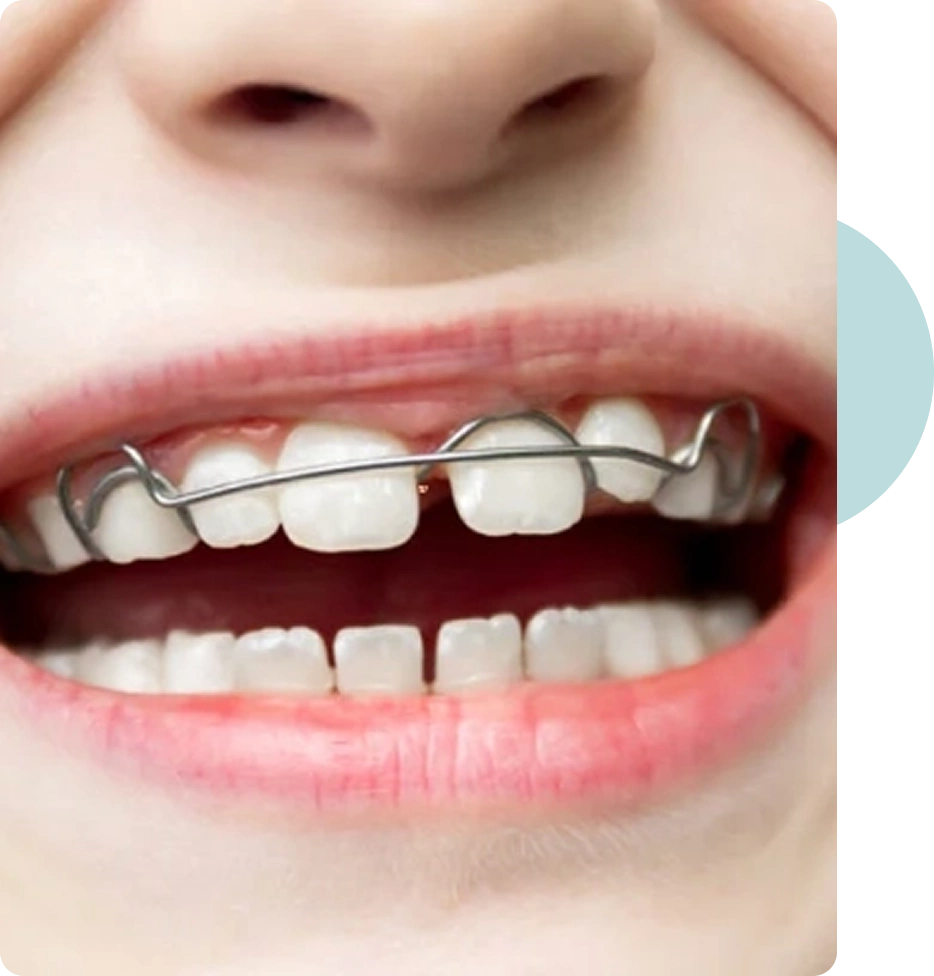
The type of space maintainer depends on the child’s age, which tooth was lost, how many teeth are missing, and whether the appliance should be fixed or removable.
- Fixed space maintainers are attached to nearby teeth and stay in place until the dentist removes them. They are often used for younger children because they do not depend on the child remembering to wear them.
- Removable space maintainers may be used in selected cases when the child is old enough to cooperate and keep the appliance clean. They can be removed for cleaning, but they must be worn as instructed.
- Unilateral space maintainers hold space on one side of the mouth. They may be used when one baby molar is lost early.
- Bilateral space maintainers can hold space on both sides of the mouth when several teeth are affected.
If the child already has crowding, bite problems, or early alignment concerns, the dentist may also recommend follow-up with orthodontics later.
Start Your Journey To a Perfect Smile
Reach out to us today and take the first step toward achieving the beautiful, healthy smile you deserve.
Space maintainer procedure steps
The dentist starts by examining the child’s teeth, gums, bite, and dental X-rays when needed. This helps confirm whether the permanent tooth is still developing under the gums and whether the space should be preserved.
If the baby tooth is already missing, the dentist measures the space and checks the neighboring teeth. If there is decay or gum inflammation, treatment may be done first through pediatric dentistry or general dentistry.
After that, impressions or digital measurements may be taken. The appliance is made to fit the child’s mouth. During placement, the dentist checks comfort, bite, and stability. Parents receive clear instructions on brushing, eating, follow-up visits, and signs that the appliance needs adjustment.
Benefits and limitations of space maintainers
The main benefit of a space maintainer is protecting the space for the permanent tooth. This can reduce the risk of crowding, drifting teeth, blocked eruption, and more complex orthodontic problems later. It can also help keep the child’s bite more stable during growth.
Space maintainers are preventive appliances, not cosmetic treatments. They do not straighten teeth like ceramic braces, metal braces, or Invisalign. They also do not replace the missing tooth permanently. Their role is to hold the space until the permanent tooth is ready to erupt.
The appliance must be monitored. If it becomes loose, bent, uncomfortable, or if the permanent tooth starts erupting, the child should visit the dentist.
Side effects and risks of space maintainers
Space maintainers are safe when they are well fitted and checked regularly. Some children may feel mild discomfort at first while getting used to the appliance. This usually improves after a short adjustment period.
Possible issues include food trapping, plaque buildup, gum irritation, appliance looseness, breakage, or discomfort when biting. Good brushing is important, especially around the appliance and the supporting teeth. If plaque builds up, the child may need teeth scaling or preventive care.
Parents should contact the dentist if the appliance moves, breaks, causes pain, or if the child avoids chewing on one side. Regular follow-up helps prevent small issues from becoming bigger problems.
Cost of space maintainers in Abu Dhabi
The cost of space maintainers in Abu Dhabi varies depending on the type of appliance, number of missing baby teeth, whether it is fixed or removable, the need for X-rays, and whether the child needs treatment before placement.
If there is decay, infection, or gum irritation, the dentist may first recommend treatment such as tooth fillings, fluoride treatment, or dental sealants to protect the remaining teeth. The final price is confirmed after the dentist examines the child.
Insurance and payment options for space maintainers
Insurance coverage for space maintainers may vary depending on the child’s policy, provider, dental necessity, and approval rules. Parents can contact Al Safwa Medical Center to check whether coverage applies through Thiqa, ADNIC, NAS, Daman, or Oman Insurance / Sukoon.
Payment options may include flexible solutions such as Tabby and selected benefits through Fazaa, depending on eligibility and clinic policy.
FAQs about space maintainers in Abu Dhabi
Here are some answers to commonly asked questions about our Medical services
What is a space maintainer?
A space maintainer is a dental appliance used for children when a baby tooth is lost too early. It keeps the space open until the permanent tooth is ready to come in.
Why does my child need a space maintainer?
Your child may need one if a baby tooth is lost early because nearby teeth can move into the empty space. This may block the permanent tooth or cause crowding later.
Are space maintainers painful?
No, they are usually not painful. Some children may feel mild pressure or discomfort at first, but they usually adjust quickly.
Is a space maintainer fixed or removable?
It can be fixed or removable depending on the child’s age, the missing tooth, cooperation level, and dentist recommendation.
How long does my child need to wear a space maintainer?
The child usually wears it until the permanent tooth starts to erupt or until the dentist decides the space no longer needs support.
Can my child eat normally with a space maintainer?
Most children can eat normally, but hard, sticky, or chewy foods should be avoided if they may loosen or damage the appliance.
How should my child clean around a space maintainer?
The child should brush carefully around the appliance every day. Parents may need to help younger children clean properly to prevent plaque buildup.
What happens if the space maintainer breaks?
Contact the dentist as soon as possible. A broken or loose appliance may stop working correctly and may irritate the gums or cheeks.
Can a space maintainer prevent braces?
It may reduce the risk of space loss and crowding, but it cannot guarantee that the child will never need orthodontics later.
How much does a space maintainer cost in Abu Dhabi?
The cost varies depending on the appliance type, case complexity, and any treatment needed before placement. The dentist confirms the price after examination
