
Dental sealants in Abu Dhabi
Dental sealants in Abu Dhabi help protect children’s back teeth from cavities by covering the deep grooves where food and plaque often collect. At Al Safwa Medical Center, our pediatric dentistry team checks your child’s teeth and explains if dental sealants are suitable.
Who needs dental sealants in Abu Dhabi?
Dental sealants are mainly recommended for children and teenagers whose permanent molars have deep grooves. These back teeth are harder to clean, so they are more likely to collect food and bacteria. Sealants may help reduce the risk of cavities, especially during the years when children are still learning how to brush properly.
Your child may need dental sealants if they often get food stuck in the back teeth, have early signs of plaque buildup, had cavities before, or find it difficult to clean the molars well. The dentist may also recommend sealants as part of a prevention plan with fluoride treatment, regular teeth scaling, and routine visits to a pediatric dentist in Abu Dhabi.
Dental sealant options available
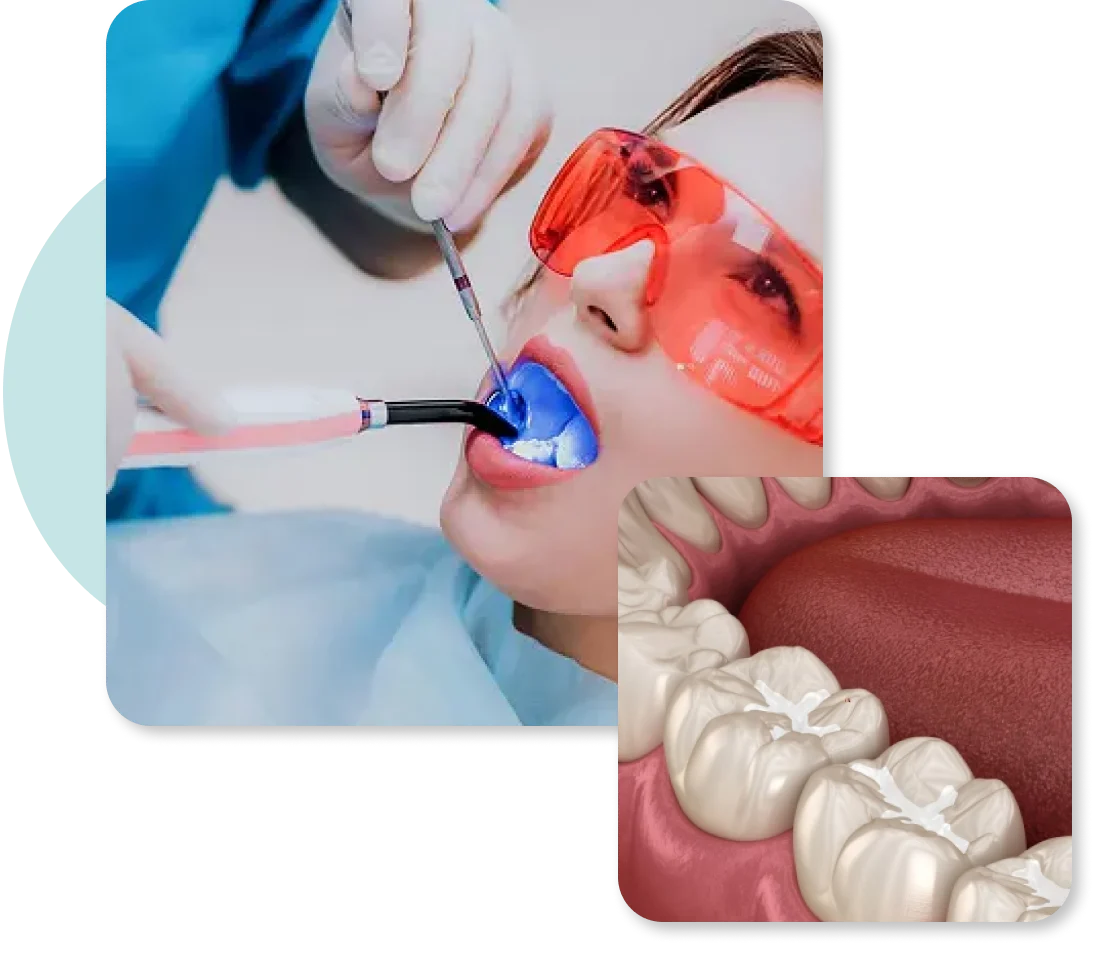
Dental sealants are usually applied to the chewing surfaces of molars and premolars. The dentist first checks if the tooth is healthy enough for sealant placement. If there is no cavity, a thin protective coating can be placed over the grooves to make the surface smoother and easier to clean.
If the tooth already has decay, a sealant alone is not enough. The child may need tooth fillings before any preventive step. If the child has weak enamel or higher cavity risk, the dentist may combine sealants with fluoride treatment. If a baby tooth is lost too early, space maintainers may be needed to protect future tooth alignment.
Start Your Journey To a Perfect Smile
Reach out to us today and take the first step toward achieving the beautiful, healthy smile you deserve.
Dental sealants procedure steps
The dental sealant procedure is simple and usually does not need drilling or anesthesia when the tooth has no cavity. The dentist cleans the tooth surface first to remove plaque and food particles. The tooth is then dried carefully so the sealant can bond well.
A conditioning material may be placed for a short time to prepare the enamel. After that, the sealant is applied into the grooves of the tooth. A curing light may be used to harden it. The dentist then checks the bite to make sure the child can close the mouth comfortably.
The visit is usually quick, and the child can return to normal daily activities after the appointment. The dentist may also explain brushing tips, diet habits, and follow-up care to reduce the risk of cavities after sealant placement. Parents can also read about preventing cavities after sweets season for extra home-care guidance.
Benefits and limitations of dental sealants
Dental sealants help protect the grooves of back teeth from food buildup and plaque. They make the chewing surface smoother, which can make brushing easier for children. Sealants are also a useful preventive step for children who have a higher risk of cavities or who are still building strong oral hygiene habits.
However, sealants do not protect every part of the tooth. They mainly cover the chewing surface, not the spaces between teeth or the gumline. Children still need daily brushing, flossing, healthy food habits, and regular dental checkups. Sealants also need to be checked during follow-up visits because they can wear down or chip over time.
If your child already has tooth decay, the dentist may recommend tooth fillings in Abu Dhabi instead of a sealant. If the issue is related to tooth development or early tooth loss, the child may need support from pediatric dentistry or space maintainers.
Side effects and risks of dental sealants
Dental sealants are generally safe when placed after proper dental examination. Some children may feel that the bite is slightly different at first, but this usually improves as the dentist adjusts the sealant or as the child gets used to it. If the sealant is too high, the dentist can smooth it during the visit.
Possible issues include sealant wear, partial chipping, trapped plaque if the tooth was not cleaned properly before placement, or the need to replace the sealant later. This is why follow-up visits are important. Parents should also watch for tooth pain, sensitivity, or food sticking around the sealed area.
Dental sealants should not be used to hide untreated cavities. If the dentist finds decay, the child may need tooth fillings or another general dentistry treatment before preventive care.
Cost of dental sealants in Abu Dhabi
The cost of dental sealants in Abu Dhabi varies depending on the number of teeth treated, the child’s oral health, the need for cleaning before the procedure, and whether other preventive treatments are needed. The dentist can confirm the price after checking the molars and making sure the teeth are suitable for sealants.
If the tooth has a cavity, the cost may change because the child may need a filling instead of a preventive sealant. If the child has a higher risk of cavities, the dentist may discuss fluoride treatment or more frequent checkups.
Insurance and payment options for dental sealants
Insurance coverage for dental sealants may vary by provider, policy, age, preventive dental benefits, and approval rules. Parents can contact Al Safwa Medical Center to check whether their plan with Thiqa, ADNIC, NAS, Daman, or Oman Insurance / Sukoon applies to pediatric dental care or preventive treatments.
Payment options may include flexible solutions such as Tabby and selected offers through Fazaa, depending on eligibility and clinic policy.
FAQs about dental sealants in Abu Dhabi
Here are some answers to commonly asked questions about our Medical services
What are dental sealants?
Dental sealants are thin protective coatings placed on the chewing surfaces of back teeth to help reduce food and plaque buildup in deep grooves.
Are dental sealants only for children?
They are most commonly used for children and teenagers, but adults with deep grooves and no decay may also be considered in some cases.
At what age should children get dental sealants?
Many children get sealants after their permanent molars come in. The dentist will check the child’s teeth during a pediatric dentistry visit and recommend the right timing.
Do dental sealants hurt?
No, sealants are usually painless. The procedure does not usually require drilling or anesthesia when the tooth is healthy.
Can sealants be placed over cavities?
No. If there is active decay, the dentist may recommend tooth fillings before placing any preventive protection.
How long do dental sealants last?
Sealants can last for years, but they need regular checks. They may wear down, chip, or need replacement over time.
Are dental sealants better than fluoride?
They work differently. Sealants protect the grooves of back teeth, while fluoride treatment helps strengthen enamel. Some children may benefit from both.
Can my child eat after dental sealants?
In most cases, children can eat after the appointment. The dentist may recommend avoiding very hard or sticky foods at first.
Do sealants replace brushing and flossing?
No. Sealants help protect certain tooth surfaces, but children still need brushing, flossing, healthy food habits, and regular dental checkups.
How do I know if my child needs dental sealants?
A dentist needs to examine the molars, cavity risk, oral hygiene, and enamel condition. You can book a visit at Al Safwa Medical Center to check if sealants are suitable.
