
Teeth restoration in Abu Dhabi
Teeth restoration in Abu Dhabi helps repair damaged, weak, decayed, worn, or missing teeth so you can chew, speak, and smile more comfortably.
Who needs teeth restoration in Abu Dhabi?
Teeth restoration may be needed when a tooth is cracked, broken, worn down, decayed, heavily filled, infected, or missing. Some patients need simple repair through tooth fillings, while others may need stronger solutions such as teeth crowns, dental bridges, or dental implants.
You may also need teeth restoration if you feel pain when chewing, have sensitivity to hot or cold drinks, notice dark spots, see visible cracks, or have an old filling that keeps breaking. If the damage affects appearance, the dentist may also compare restoration with teeth bonding, veneers and Emax, or other cosmetic dentistry options.
Teeth restoration options in Abu Dhabi
Teeth restoration is not one treatment. It is a treatment plan that depends on how much of the tooth is damaged and whether the root, gum, or surrounding teeth are affected.
Tooth fillings are used for small to moderate cavities or minor tooth damage. They restore the missing part of the tooth and help prevent decay from spreading. Learn more about tooth fillings in Abu Dhabi.
- Teeth crowns are used when the tooth is weak, cracked, heavily filled, or needs full coverage after deeper damage. A crown protects the remaining tooth structure and restores shape and chewing function. Read more about teeth crowns in Abu Dhabi.
- Root canal treatment may be needed if the infection has reached the nerve of the tooth. After root canal treatment, the dentist may restore the tooth with a filling or crown depending on its strength.
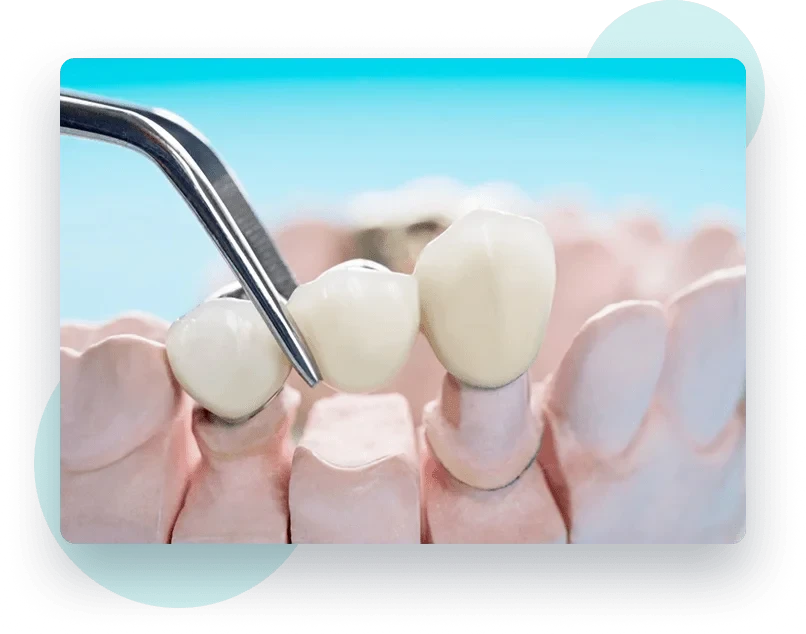
- Dental bridges can replace one or more missing teeth by using nearby teeth for support. They may be suitable when implants are not the preferred option. Explore dental bridges in Abu Dhabi.
- Dental implants are used to replace missing teeth with a fixed solution that supports chewing and smile function. In some cases, implant treatment may also include bone grafting before placement.
Start Your Journey To a Perfect Smile
Reach out to us today and take the first step toward achieving the beautiful, healthy smile you deserve.
Teeth restoration procedure steps
The teeth restoration process starts with a dental examination. The dentist checks the damaged tooth, surrounding teeth, gums, bite, old fillings, and symptoms such as pain or sensitivity. X-rays may be needed to see decay depth, root condition, bone support, or hidden infection.
If the problem is minor, the tooth may be restored with a filling or bonding. If the tooth is weak or cracked, the dentist may recommend a crown. If there is nerve infection, endodontic treatment may come first. If a tooth is missing, the dentist may compare dental implants and dental bridges based on your oral health and treatment goals.
Before the final restoration, the dentist may treat gum inflammation, clean the teeth, or remove decay. Services such as teeth scaling and gum disease treatment may be needed if the gum condition affects long-term success.
Benefits and limitations of teeth restoration
Teeth restoration helps save damaged teeth, improve chewing, reduce sensitivity, protect weak teeth, replace missing teeth, and improve smile appearance. It can also stop a small dental problem from becoming more complex when treatment is done early.
The main benefit is that treatment can be customized. A small cavity may need a simple tooth filling, while a cracked tooth may need a dental crown. A missing tooth may need a dental implant or dental bridge.
The limitation is that not every tooth can be restored. If the tooth is severely broken, has poor bone support, or has deep infection that cannot be controlled, removal may be considered. In these cases, replacement options can be discussed as part of a full dental implants or restorative plan.
However, veneers have limitations. They are not a replacement for orthodontics when teeth are severely crowded or misaligned. They are also not ideal for untreated gum disease, active decay, or heavy teeth grinding unless these problems are managed first. Patients who grind or clench their teeth may need a night guard to reduce the risk of chipping or damage.
For some patients, a different treatment may be more suitable. Snap-On Smile may be considered for a removable cosmetic option. Dental crowns may be better when the tooth needs more structural coverage. Dental bridges or dental implants may be needed if there are missing teeth
Side effects and risks of teeth restoration
Teeth restoration is generally safe when planned correctly, but some temporary symptoms may happen depending on the treatment type. These may include sensitivity after fillings, mild gum soreness after crown preparation, temporary discomfort after root canal treatment, or adjustment time after bridges or implants.
Possible risks include filling fracture, crown looseness, bite discomfort, gum irritation, recurrent decay, infection, or the need for future repair. These risks are lower when the tooth is properly diagnosed, the restoration fits well, and the patient maintains good oral hygiene.
If gum disease is present, restorative treatment may not last well unless the gum condition is treated first. In this case, the dentist may recommend periodontics, gum disease treatment, or teeth scaling before the final restoration
Possible risks include veneer chipping, debonding, bite discomfort, shade mismatch, gum irritation, or the need for future replacement. These risks can be reduced with accurate planning, healthy gums, good oral hygiene, proper bite adjustment, and avoiding habits such as biting hard objects or using teeth as tools.
Before treatment, the dentist should check for decay, gum disease, bite problems, and signs of grinding. If gum health is a concern, the patient may need gum disease treatment before veneers. If root pain or deep infection is present, root canal treatment may be needed before cosmetic work
Cost of teeth restoration in Abu Dhabi
The cost of teeth restoration in Abu Dhabi varies because the treatment may involve fillings, crowns, root canal treatment, bridges, implants, gum care, or cosmetic repair. The final price depends on the number of teeth, type of damage, materials used, X-rays, lab work, and whether additional treatment is needed before restoration.
A simple restoration usually costs less than a full tooth replacement or a multi-tooth treatment plan. The dentist will first examine the tooth and then explain the most suitable option, expected steps, and cost before treatment starts.
Insurance and payment options for teeth restoration
Insurance coverage for teeth restoration may vary depending on the treatment type and the policy. Some restorative treatments may be considered medically necessary, while cosmetic parts of treatment may have different coverage rules. Patients can contact Al Safwa Medical Center to check coverage with providers such as Thiqa, ADNIC, NAS, Daman, or Oman Insurance / Sukoon.
Payment options may include flexible payment through Tabby and selected offers through Fazaa, depending on eligibility and clinic policy.
FAQs about teeth restoration in Abu Dhabi
Here are some answers to commonly asked questions about our Medical services
What is teeth restoration?
Teeth restoration is dental treatment used to repair damaged, decayed, weak, worn, or missing teeth. It may include fillings, crowns, bridges, implants, bonding, or root canal treatment depending on the case.
When do I need teeth restoration?
You may need teeth restoration if you have tooth pain, a cavity, a cracked tooth, broken filling, worn tooth, missing tooth, or sensitivity when eating or drinking.
Can a broken tooth be restored?
Yes, many broken teeth can be restored. Small breaks may need bonding or a filling, while larger breaks may need a crown or root canal treatment before restoration.
Is teeth restoration painful?
Most restorative treatments are done with local anesthesia when needed. You may feel temporary sensitivity or mild discomfort after treatment, depending on the case.
What is the best option for a damaged tooth?
The best option depends on the amount of remaining tooth structure, nerve condition, bite pressure, and gum health. The dentist may recommend a filling, crown, root canal treatment, bridge, or implant.
Can restoration save a tooth from extraction?
In many cases, yes. Early restoration can protect the tooth and reduce the risk of extraction. Severely damaged teeth may still need removal if they cannot be saved.
Do I need a crown after root canal treatment?
Some teeth need crowns after root canal treatment, especially back teeth or weak teeth. The dentist will check the remaining tooth structure before deciding.
How long does teeth restoration last?
It depends on the treatment type, material, oral hygiene, bite pressure, diet, and regular dental checkups. Good care helps restorations last longer.
How much does teeth restoration cost in Abu Dhabi?
The cost varies based on the treatment needed, tooth condition, materials, and whether lab work or additional procedures are required. A dental examination is needed for an accurate price.
Can teeth restoration improve my smile?
Yes, teeth restoration can improve both function and appearance, especially when damaged, worn, stained, or missing teeth affect the smile.
