
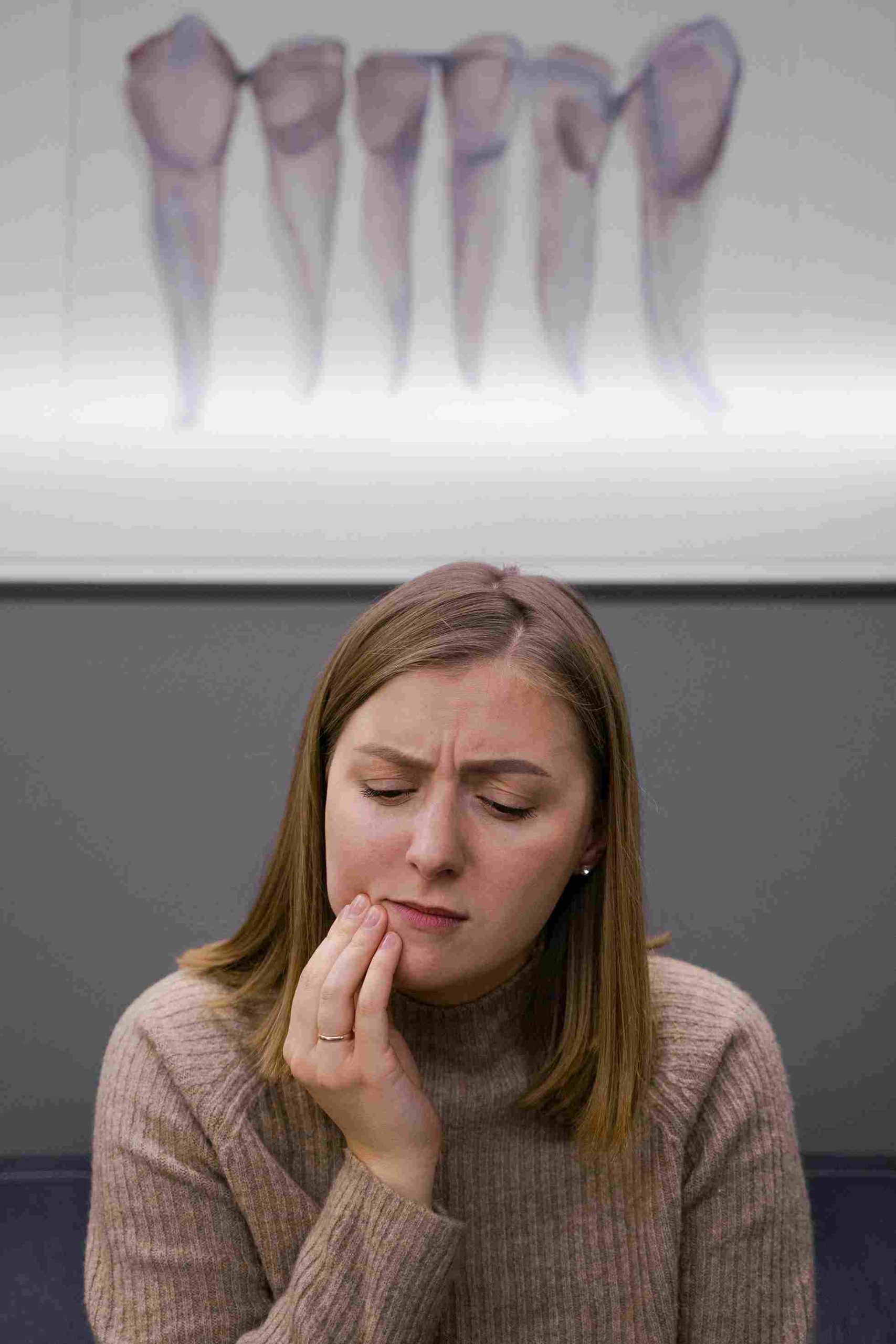
Wisdom tooth pain Abu Dhabi is one of the most common reasons patients book a sudden dental appointment, especially when discomfort starts at the very back of the jaw and quickly changes from mild pressure to swelling, pain while chewing, or difficulty opening the mouth. Some patients describe it as a dull ache behind the last molar. Others notice gum swelling, a bad taste, or pain radiating toward the ear, throat, or side of the face.
The difficulty is that wisdom tooth pain does not always mean the same thing. In one patient, it may be caused by partial eruption with food trapping under the gum. In another, it may be due to an impacted wisdom tooth symptoms pattern involving pressure against the adjacent molar, repeated infection, or deep inflammation around the surrounding tissue. In more advanced cases, the problem becomes not just discomfort, but a true swelling infection wisdom tooth situation that needs urgent evaluation.
This is why the real question is not simply, “Should it be removed?” The more useful question is: when is removal actually necessary, when can the tooth be monitored, how long does healing usually take, and which warning signs mean the case may need an emergency dentist Abu Dhabi assessment rather than routine observation?
This article explains the most common causes of wisdom tooth pain, when extraction is usually recommended, what influences the wisdom tooth removal recovery timeline, and which red flags should not be ignored.
Why does a wisdom tooth become painful?
A wisdom tooth becomes painful for differet reasons, depending on how it erupts, how much space is available, and whether it is damaging the surrounding gum or nearby tooth.
Wisdom teeth are the last molars to develop and erupt. Because they appear later than the rest of the dentition, many patients do not have enough space for them to come in properly. When that happens, the tooth may erupt only partially, remain trapped beneath the gum, tilt toward the second molar, or stay embedded in bone.
Pain can result from:
- pressure during eruption
- inflammation of the gum tissue over the tooth
- food and bacteria collecting around a partially erupted tooth
- decay in the wisdom tooth or the tooth next to it
- trauma from biting onto swollen tissue
- pressure from an impacted tooth against the adjacent molar
- infection spreading in the soft tissues behind the last tooth
So wisdom tooth pain Abu Dhabi is not one single diagnosis. It is a symptom that needs clinical examination and imaging to identify the real cause.
What symptoms usually suggest the wisdom tooth is the source?
In some patients, the pain is clearly located behind the last molar, making the source obvious. In others, the discomfort spreads into the ear, throat, temple, or entire jaw, which can make the problem harder to identify without examination.
Common signs that point toward a wisdom tooth include:
- pain at the back of the jaw
- tenderness in the gum behind the last molar
- swelling of the gum flap over the tooth
- pain when chewing on that side
- a bad taste or smell from the area
- pressure around the back molar region
- difficulty opening the mouth fully
- repeated flare ups that settle and return
These symptoms often fit the pattern of impacted wisdom tooth symptoms or inflammation around a partially erupted tooth.
Still, not every back jaw pain comes from a wisdom tooth. Sometimes the second molar is decayed, cracked, or inflamed. That is why X rays and a clinical exam are essential before deciding on removal.
What is a wisdom tooth infection, and why does it keep coming back?
A very common reason for pain is inflammation around a partially erupted wisdom tooth. Clinically, this is often called pericoronitis.
It happens when part of the tooth has erupted but a flap of gum tissue still covers it. That flap creates a pocket where:
- food gets trapped
- bacteria accumulate
- cleaning becomes difficult
- the tissue becomes swollen and painful
Typical symptoms of a swelling infection wisdom tooth problem may include:
- throbbing pain at the back of the jaw
- red swollen gum tissue
- pain on swallowing in some cases
- a bad taste or drainage from the area
- difficulty opening the mouth
- bad breath
- tenderness in nearby lymph nodes when the infection is more pronounced
One reason this condition frustrates patients is that it may improve temporarily with irrigation, medication, or better cleaning, then return later. If the underlying cause is a partially erupted or poorly positioned wisdom tooth, the problem often repeats until the tooth is removed or the anatomy changes enough to make the area cleanable.
What does it mean when a wisdom tooth is impacted?
An impacted wisdom tooth is one that has not erupted into a normal, functional position.
It may be:
- fully trapped in bone
- partially covered by gum
- tilted toward the second molar
- angled backward
- lying almost horizontally
These positions matter because they affect:
- whether the tooth causes pain
- whether it damages the tooth in front of it
- whether it traps bacteria
- whether removal is simple or surgical
- whether nearby structures, such as the inferior alveolar nerve or sinus, need special attention
Not every impacted tooth is painful. Some stay quiet for years. However, many impacted wisdom tooth symptoms begin when the tooth starts affecting soft tissue, trapping food, or pressing against the neighboring molar.
When is wisdom tooth removal actually necessary?
Not every wisdom tooth needs to be removed. However, there are clear clinical situations where extraction becomes the better long term option.
Removal is commonly recommended when:
The patient has repeated infection
If inflammation keeps returning, the problem is usually structural rather than temporary. Repeated gum infection around a partially erupted tooth is one of the strongest reasons for removal.
The pain keeps coming back
Intermittent flare ups, especially with chewing or swelling, usually suggest that the tooth is not functioning well in the mouth.
The tooth is damaging the second molar
An impacted wisdom tooth may press against the molar in front of it, making cleaning difficult and increasing the risk of decay or bone loss on the distal side of that second molar.
The tooth is badly positioned
A tooth that is horizontal or sharply angled usually has little realistic chance of erupting into a useful position.
The area cannot be kept clean
Even without severe pain, poor access for cleaning can make repeated infection or decay likely over time.
There is swelling, abscess formation, or spreading infection
Once the case moves into a true swelling infection wisdom tooth pattern, delay becomes less advisable.
So the decision for extraction should be based on anatomy, function, hygiene access, and repeated inflammation, not just one painful day.
When can a wisdom tooth be monitored instead of removed?
There are situations where observation is reasonable.
A wisdom tooth may be monitored if:
- it is fully erupted in a functional position
- it can be cleaned properly
- it is not causing pain or swelling
- it is not harming the tooth next to it
- there are no suspicious findings on X ray
Monitoring does not mean forgetting about it. It means regular review. If the position changes, if symptoms begin, or if the second molar becomes affected, the decision may shift from observation to extraction.
What are the red flags that make the problem urgent?
This is one of the most important parts of the topic. Some wisdom tooth pain can wait for a routine appointment. Some cannot.
You should seek faster evaluation, and in some cases an emergency dentist Abu Dhabi, if you develop:
- visible swelling of the face or jaw
- increasing difficulty opening the mouth
- severe pain that is not responding to routine pain relief
- pus or foul tasting discharge
- pain with swallowing
- fever or feeling unwell
- rapidly worsening symptoms over a short period
- swelling extending into the cheek or under the jaw
These are important red flags because they may indicate a spreading infection rather than a localized gum irritation.
A severe swelling infection wisdom tooth should not be managed by waiting for it to “settle on its own,” especially if function is becoming affected.
Is every wisdom tooth extraction surgical?
No. The type of extraction depends on the tooth position.
A fully erupted wisdom tooth in an accessible position may sometimes be removed in a relatively straightforward way. A partially erupted or impacted tooth may require a surgical approach.
Surgical extraction may involve:
- lifting the gum tissue
- removing a limited amount of bone
- sectioning the tooth into parts when needed
- cleaning the area and placing sutures if appropriate
This does not automatically mean the procedure is dangerous. It simply means the tooth’s position requires a more controlled approach.
The choice between simple extraction and surgical removal is based on clinical examination and radiographic findings, not on pain level alone.
What makes one wisdom tooth case more difficult than another?
The difficulty of a wisdom tooth case depends on several factors:
- depth of impaction
- angle of the tooth
- whether the tooth is covered by gum, bone, or both
- root shape and root curvature
- proximity to the inferior alveolar nerve in lower wisdom teeth
- relationship to the sinus in upper wisdom teeth
- the patient’s age
- the presence of infection or swelling at the time of treatment
That is why recovery and extraction complexity vary so much between patients. Two patients may both say, “I had my wisdom tooth removed,” but the actual procedures may have been very different.
How long is the recovery after wisdom tooth removal?
One of the most common questions is about the wisdom tooth removal recovery period.
Recovery happens in phases. In general:
- the first 24 hours focus on clot formation and bleeding control
- swelling and soreness are often most noticeable during the first 2 to 3 days
- gradual improvement usually starts after that
- soft tissue healing progresses over the following days to weeks
- deeper bone remodeling continues for longer in the background
For many patients, the most uncomfortable period is early, then symptoms improve steadily. Still, the exact timeline depends on how complex the extraction was, whether infection was present beforehand, and how closely the patient follows postoperative instructions.
So the wisdom tooth removal recovery timeline is not identical for every patient, but early improvement is generally expected if healing is progressing normally.
What affects the recovery timeline?
Recovery is influenced by more than the extraction itself.
Important factors include:
- whether the tooth was fully erupted or impacted
- whether the procedure was simple or surgical
- whether infection and swelling were already present
- how much bone removal was needed
- whether the patient smokes
- whether the patient follows postoperative instructions carefully
- overall health and healing capacity
- whether the patient places early pressure or trauma on the area
A deeply impacted tooth removed from an inflamed site will usually take longer to recover from than a straightforward erupted tooth with no pre existing infection.
What should patients expect in the first few days?
Some degree of the following is common:
- soreness at the extraction site
- mild to moderate swelling
- limited mouth opening for a short period
- discomfort while chewing
- tenderness in the surrounding muscles
That said, symptoms should generally move in the right direction after the early phase. If pain or swelling starts increasing instead of improving, that is a sign the site should be reassessed.
What helps recovery after wisdom tooth removal?
After wisdom tooth removal recovery begins, the goal is to protect the blood clot, reduce irritation, and support healing.
Typical instructions may include:
- biting on gauze as directed after the extraction
- avoiding forceful rinsing immediately after treatment
- not disturbing the site with fingers or repeated tongue pressure
- taking prescribed medication exactly as instructed
- following guidance on food consistency in the early phase
- avoiding smoking because it can interfere with clot stability and healing
- using cold compresses early if recommended by the dentist
- contacting the clinic if symptoms become unusual rather than improve
Patients often underestimate how important these instructions are. In reality, they are part of the treatment, not just an afterthought.
What is not normal after a wisdom tooth extraction?
Some discomfort is expected. Certain patterns are not.
You should contact the clinic if you develop:
- pain that becomes significantly worse instead of better
- persistent bleeding that does not settle
- increasing swelling after the first few days
- foul odor with severe site pain
- fever
- worsening difficulty opening the mouth
- no improvement at all after the expected early recovery period
- severe radiating pain after initial improvement
These signs may suggest a complication such as local infection or clot related healing disturbance and should not be ignored.
Can wisdom tooth pain affect nearby teeth?
Yes, and this is one of the reasons observation is not always harmless.
A poorly positioned wisdom tooth may:
- make the distal surface of the second molar difficult to clean
- increase the risk of decay on the adjacent tooth
- create gum inflammation behind the second molar
- contribute to bone loss in that area
- place pressure on the neighboring tooth
So in some patients, the issue is not only the wisdom tooth itself. It is the damage the wisdom tooth can cause if it remains in a poor position.
Is it better to remove the wisdom tooth before repeated infections happen?
In selected cases, yes.
When a tooth is clearly badly positioned and already showing a pattern of repeated inflammation, planned removal in a controlled setting is often better than waiting for another painful flare up or a larger infection.
This matters because:
- treatment is often easier to plan when the tissues are calmer
- the patient can receive clearer postoperative instructions
- the risk to the neighboring tooth may be reduced
- repeated antibiotic or painkiller cycles do not solve the anatomical cause
So the best timing for removal is not always “when it hurts the most.” In many cases, it is when the clinical evidence shows that repeated future trouble is likely.
How do dentists decide between temporary treatment and removal?
When a patient presents with wisdom tooth pain Abu Dhabi, the first step may sometimes be temporary control of the acute problem, especially if there is active swelling or inflamed tissue.
This may include local cleaning and appropriate medication depending on the case. But temporary treatment is not the same as final treatment.
If the cause is:
- a one time irritation around a normally positioned tooth, short term care may be enough
If the cause is:
- repeated infection
- a partially erupted tooth with a gum flap
- an impacted tooth pressing against the second molar
- a poor eruption angle with no functional value
then extraction usually becomes the more definitive solution.
When should you book with an emergency dentist in Abu Dhabi?
You should consider an emergency dentist Abu Dhabi visit if:
- facial swelling is developing
- opening the mouth is becoming difficult
- there is pus, fever, or severe throbbing pain
- swallowing is painful
- the pain is escalating rapidly
- the infection appears to be spreading beyond the immediate gum area
These are not symptoms to simply observe for several more days.
Early intervention often keeps the problem more localized and prevents the situation from becoming harder to manage.
Plan your wisdom tooth treatment before the next flare up becomes worse
If you are dealing with wisdom tooth pain Abu Dhabi, repeated gum swelling, or signs of impacted wisdom tooth symptoms, the most useful next step is to identify whether the tooth is likely to settle with monitoring or whether it is structurally set up to keep causing problems.
If imaging shows a poor eruption path, repeated infection, or pressure on the adjacent molar, reviewing your options for wisdom tooth removal in Abu Dhabi can help prevent more inflammation and reduce long term damage to nearby teeth. If your symptoms already include facial swelling, limited opening, or signs of a swelling infection wisdom tooth, the case may need faster assessment through an emergency dentist Abu Dhabi appointment rather than routine observation. And if the pain is mixed with jaw tension, limited opening, or symptoms that are not clearly dental, your dentist may also assess related jaw pain and TMJ symptoms in Abu Dhabi to confirm the true source of discomfort.
Booking an evaluation at our dentist appointment Bani Yas clinic allows the dentist to examine the tooth clinically, review the X ray, assess the likely wisdom tooth removal recovery complexity, and decide whether your case needs monitoring, short term infection control, or definitive extraction.
