
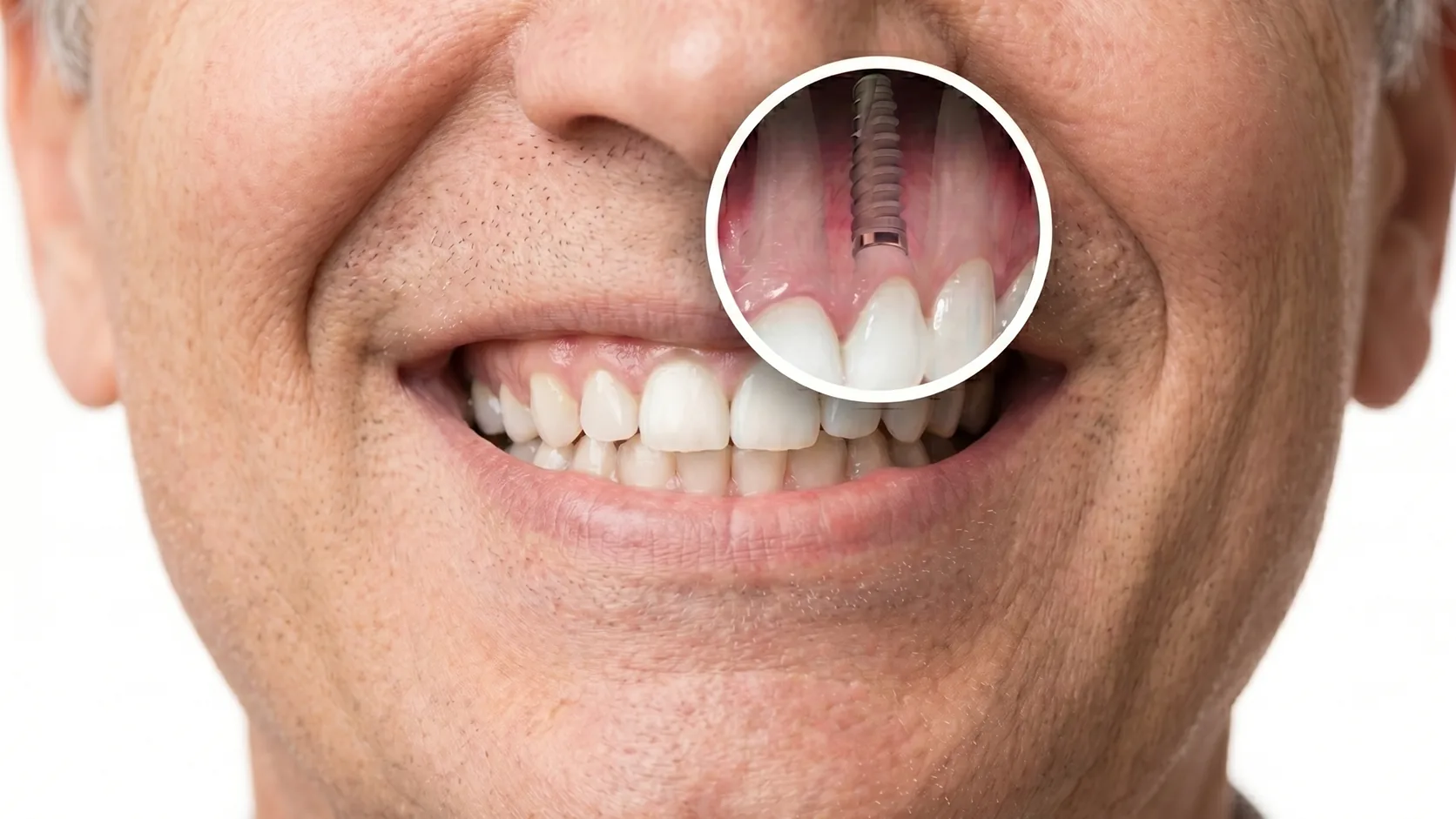
Losing a tooth changes more than the appearance of your smile. It affects how you chew, how neighbouring teeth shift over time, and how the jawbone beneath the gap responds to the absence of root stimulation. Dental implants in Abu Dhabi are the only tooth replacement option that addresses all three of these consequences — restoring the visible tooth, the function, and the root stimulation that prevents bone loss.
This guide covers everything patients in Abu Dhabi and the UAE commonly ask before deciding whether implants are right for them: how the procedure works, who qualifies, what the full cost depends on, how long the process takes, and what the realistic risks are. If you are comparing implants against other options, the comparison of fixed and removable dental prostheses and the page on dental bridges in Abu Dhabi provide useful context for that decision.
How dental implants work
A dental implant is a titanium post placed surgically into the jawbone to replace the root of a missing tooth. Titanium is used because of its biocompatibility — the bone grows around and fuses with the post in a process called osseointegration, creating a stable, permanent anchor. Once osseointegration is complete, a ceramic crown is attached to the post via a connecting piece called an abutment. The result is a tooth that looks, feels, and functions like a natural one.
Unlike a dental bridge, an implant does not require the neighbouring teeth to be modified to support it. Unlike a removable denture, it does not move or require removal for cleaning. And unlike both alternatives, it stimulates the jawbone through normal biting forces, preventing the bone resorption that typically begins within the first year after tooth loss.
Who is a good candidate for dental implants?
Most healthy adults who have lost one or more teeth are potential candidates. The key factors a dentist assesses before recommending implants are bone density, gum health, overall medical history, and habits like smoking that are known to affect healing.
Bone density and volume
The implant post needs adequate bone to anchor into. Patients who lost teeth months or years before considering implants may have experienced some bone resorption in the area. A 3D cone beam CT scan shows the available bone volume and density clearly. When bone volume is insufficient, a bone grafting procedure can rebuild the site before implant placement — this is a well-established preparatory step, not a disqualifying factor.
Gum health
Active periodontal disease significantly increases the risk of implant failure — the same bacterial environment that destroys the tissue supporting natural teeth can attack the tissue around an implant post. Gum disease treatment must be completed before implant placement, not deferred until after. Healthy gums are a non-negotiable prerequisite.
Medical conditions and medications
Uncontrolled diabetes, autoimmune conditions, and certain medications that affect bone density or wound healing can influence implant success rates. Most of these conditions do not rule out implants entirely — they require careful management and coordination with the patient’s physician. A thorough medical history review is part of every implant assessment at Al Safwa’s dental implants team.
Smoking
Smoking reduces blood flow to the gum tissue and bone, which is precisely what is needed for successful osseointegration. The research is consistent — smokers have meaningfully higher implant failure rates than non-smokers. Stopping smoking before the procedure and during the healing period significantly improves outcomes. The American Dental Association identifies tobacco use as one of the primary modifiable risk factors for implant complications.
The dental implant procedure: stages and timeline
| Stage | Approximate timeframe | What happens |
|---|---|---|
| Assessment and planning | 1–2 visits | 3D scan, medical review, treatment plan with costs |
| Preparatory procedures | As needed | Bone graft or gum treatment if required |
| Implant placement | Single appointment | Titanium post placed under local anaesthesia |
| Osseointegration | 3–6 months | Bone fuses with the implant post |
| Crown placement | 1–2 visits | Abutment and final ceramic crown fitted |
The osseointegration phase is the longest part of the process and cannot be shortened — the biology of bone fusion simply takes time. Patients who require bone grafting before implant placement should expect several additional months before the graft has consolidated sufficiently for the implant post to be placed. The total timeline from first consultation to final crown in a straightforward case is typically four to six months. Cases requiring preparatory procedures can extend to twelve months or more.
What does dental implant treatment cost in Abu Dhabi?
The cost of a single dental implant in Abu Dhabi varies depending on several factors: the implant system used, the material and type of crown, the number of teeth being replaced, and whether preparatory procedures like bone grafting are needed. A single implant with a ceramic crown is the most common treatment, but patients replacing multiple teeth may discuss options including implant-supported bridges or full-arch implant protocols.
A precise cost estimate can only be given after the initial assessment and 3D scan, which reveals the complexity of each specific case. What appears straightforward on a surface examination often requires modification once the bone volume and anatomy are properly evaluated. The treatment plan provided after the assessment will include a full itemised cost breakdown before any commitment is made.
Dental implants vs bridges vs dentures: how to choose
Each option represents a different trade-off between invasiveness, longevity, cost, and maintenance requirements. Understanding these trade-offs helps patients make a decision that fits their circumstances rather than simply accepting a default recommendation.
A dental bridge replaces a missing tooth without surgery by supporting an artificial tooth on the two teeth adjacent to the gap. It does not require osseointegration time and typically costs less than an implant. The trade-off is that the supporting teeth must be reduced to accommodate the bridge crowns, the underlying bone continues to resorb, and the bridge will eventually need replacement after ten to fifteen years.
Removable dentures — partial or complete — are the least invasive and least expensive option but carry the most functional limitations. They move, require daily removal for cleaning, do not stimulate bone, and patients consistently report reduced chewing confidence compared to fixed options. The fixed vs removable prostheses guide covers this comparison in more detail.
Implants have the highest upfront cost and the longest treatment timeline but offer the best long-term functional outcome — and when properly maintained, a well-placed implant can last several decades. The clinical literature on PubMed consistently shows long-term survival rates for dental implants exceeding 95% over ten-year follow-up periods in patients without major risk factors.
Can dental implant complications be avoided?
Most implant complications are preventable with proper patient selection, thorough pre-treatment planning, and consistent post-treatment maintenance. The most common late complication is peri-implantitis — an inflammatory condition affecting the gum and bone around the implant post — which is caused by bacterial accumulation and is directly analogous to periodontal disease around natural teeth. Twice-daily brushing, daily interdental cleaning, and regular professional maintenance visits are the primary defences. A detailed overview of complications and how to prevent them is available in the guide to 5 common dental implant complications and how to avoid them.
Considering dental implants in Abu Dhabi?
At Al Safwa Medical Center in Bani Yas, Abu Dhabi, the dental implants team begins every case with a comprehensive assessment — 3D imaging, medical history review, and a frank discussion of what the treatment involves, how long it will take, and what it will cost — before any treatment begins. The goal is to give you a complete picture so you can decide with confidence.
- Dental implants Abu Dhabi
- Dental bridges Abu Dhabi
- Teeth restoration Abu Dhabi
- Bone grafting Abu Dhabi
- Gum disease treatment Abu Dhabi
- Book your assessment
The Al Safwa dental team is available to answer your questions and assess your specific situation during your first visit.
Frequently asked questions
How long do dental implants last in Abu Dhabi?
The titanium implant post, once fully integrated with the jawbone, can last several decades and potentially a lifetime with proper maintenance. The ceramic crown attached above the gumline typically needs replacement after ten to fifteen years or more, depending on wear and how well it is maintained. Regular professional check-ups are the key to detecting any early issues before they develop.
Is dental implant surgery painful?
The procedure is performed under local anaesthesia and patients do not experience pain during it. Some swelling and tenderness in the days following surgery is normal and expected. This is typically managed with prescribed pain relief medication and resolves within a week. Most patients report that the recovery is less uncomfortable than they anticipated before the procedure.
What happens if I do not have enough bone for an implant?
Insufficient bone volume does not automatically disqualify a patient from implants. A bone graft can rebuild the site before implant placement. The graft is given time to consolidate — typically three to six months — before the implant post is placed. This extends the overall timeline but produces a stable base for a successful implant outcome.
Can I get multiple implants at the same time?
Yes. Multiple implants can be placed in the same surgical session, depending on the bone condition and the patient’s overall health. Patients who have lost all or most of their teeth may be candidates for full-arch protocols like All-on-4 or All-on-6, which replace an entire arch of teeth on a smaller number of implant posts. Your dentist determines the appropriate approach after the assessment.
How do I care for dental implants after placement?
During the healing period: soft foods, no direct pressure on the implant site, gentle oral hygiene around the area, and no smoking. Once the crown is in place, care is essentially identical to natural teeth — brush twice daily, use interdental brushes or floss, avoid using the front implant teeth to bite directly into very hard foods, and attend regular professional cleaning appointments.
